What did OpenRouter launch?
On November 10, OpenRouter launched its Extractions API in alpha. It lets developers request named, typed fields from documents, with input support depending on the selected model.
For a business still moving information from attachments into operational software, that is a useful development. The opportunity is to make one repetitive intake task easier to check and connect to the work that follows.

Our view: evaluate it on a specific queue before redesigning the department around it. A purchase-order inbox or supplier onboarding step gives the team a concrete result to inspect.
Here is what the launch changes, which differences matter when choosing a model, and what a worthwhile pilot should prove. The test is whether employees receive usable information with less correction work.
What can the Extractions API handle today?
The announcement named three launch models: Cloudflare Clairic, Inception Mercury Decide and ScaleDown Extract. The supported list has since expanded. The current guide, checked November 13, still labels the interface alpha and warns that it can change.
“Typed” means the application asks for a defined kind of answer, such as text or a date. That makes the intended result explicit. It does not establish that the value matches the source or belongs to the right business record.
The model-specific guide shows why selection matters. Clairic accepts text and up to four supported images, but not PDFs. ScaleDown accepts text or one supported document or image. Mercury’s extraction support is text-only. Field types vary too.
For example, imagine an equipment distributor receiving emailed purchase orders. One customer sends a clean PDF; another sends a photograph; another pastes an order into an email. Treat those as different evaluation cases. A successful demonstration on the cleanest file says little about the rest of the inbox.
Start with the documents employees actually handle and the fields they spend time checking. If staff mainly need an order reference and delivery instructions, a broader forecasting feature may add nothing to that job. If dates or quantities are important, inspect those separately rather than averaging them together with easy text fields.
Why does a dedicated extraction interface matter?
1. It gives a small task a clear boundary
Our reading of this launch is that specialized AI tasks are becoming easier to buy and evaluate individually. A business does not have to begin by handing an entire workflow to an agent. It can begin with one question: can software prepare the information this employee needs?
That boundary helps with accountability. The operations lead defines a useful result. The employee checks representative documents. The technical team connects accepted results to the existing process. Each person can explain what success means without having to judge an open-ended conversation.
In the distributor example, the first useful result could be a prepared order record waiting for review. Stock allocation, customer credit and delivery commitments can remain with the systems and people already responsible for them. This is an illustrative design, not a reported customer implementation.
2. It makes the evidence worth examining
According to the guide, evidence spans are optional and may be absent for images or documents. Confidence and missing-value signals also vary. A truncation flag can mean the provider read only the beginning of the input.
Those details should shape the review experience. A reviewer needs to know whether a value can be located in the original document, whether it was inferred, and whether the whole document was considered. Displaying a neat answer alone leaves the important work hidden.
We would treat a missing required value as unfinished work. Keep it visible for the person handling the order. Quietly substituting a plausible answer can make the queue look healthier while passing an unresolved problem to the next employee.
An illustrative operating design, not OpenRouter’s internal architecture.
3. It separates reading a document from deciding what to do
The launch examples include calculated dates and estimated values as well as direct extraction. Those outputs need different treatment. An estimate is not a statement found in the document, and reading a payment amount does not authorize payment.
Keep that distinction obvious to the person using the result. For a first intake pilot, we would favor source-backed fields and postpone predictions until there is a separate reason to evaluate them. A narrower scope makes it easier to identify which errors are coming from document reading and which belong to business judgment.
This also keeps the project distinct from classification. Our Jev article examines choosing a route for a request. Extraction prepares values that a later step may use. Combining the two can be useful, but each step should earn its place.
What should a business test before committing?
Choose a queue with enough repetition to matter and an employee who can check the result. Keep the existing process available during the evaluation. Compare the proposed output with what staff would accept, including incomplete documents, revisions and contradictory instructions.
Review time is a useful measure. Does the prepared record make the employee faster, or does checking it take as long as entering the information? Record corrections by field. A system that usually finds a customer name but repeatedly misreads quantities needs a different response from one that struggles only with poor photographs.
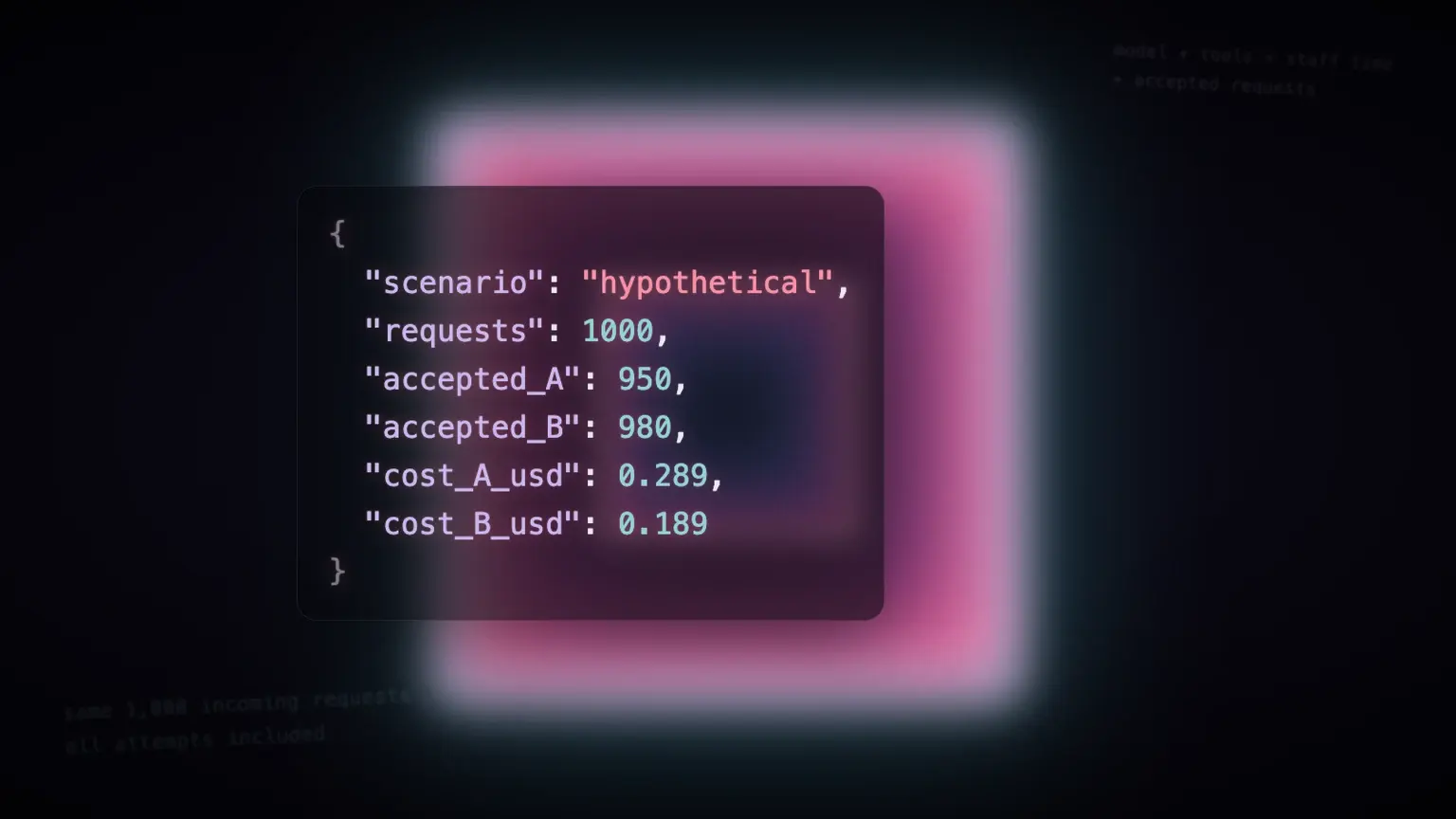
Also inspect the cost of the difficult cases. Include repeated attempts, document preparation, application work and staff correction in the comparison. A small model bill is welcome; it cannot justify extra work elsewhere. We have not benchmarked this API and are not reporting measured savings.
Because this is an alpha interface, assign someone to own compatibility changes and the fallback process. The pilot should remain reversible. A supplier should still be able to place an order when the experiment is unavailable, and staff should be able to find work that has not completed.
Review the proposed data destinations and handling terms before uploading real business documents. Use approved or appropriately redacted examples while those decisions are being made. The product announcement alone does not establish that a particular document is suitable to send.
Once the extracted information is accepted, decide which system owns it. Our integration and data work starts with that question because a new intake tool should improve the business record rather than create another conflicting copy.
The opportunity here is practical: make a small, expensive piece of office work easier to perform. Our recommendation is to fund a bounded evaluation when manual intake is a real bottleneck. Expand only when the results hold up on the awkward documents as well as the attractive demo.
FAQs
Is the OpenRouter Extractions API ready for production?
It is available in alpha. For a business decision, that calls for a limited evaluation with an existing fallback and a named owner. Whether to rely on it for a particular process depends on that process’s requirements and the evidence from testing.
Can we use the same model for every document?
Do not assume so. Compare the actual input formats and required fields with the current model guide, then evaluate representative files. The choice should follow the documents your business receives rather than whichever model looks most capable in a general comparison.
Does a confidence score mean the extracted value is correct?
No. Treat it as a signal to evaluate against reviewed examples. An incorrect value can still look plausible. The consequences of a wrong quantity, date or bank detail should determine the level of review, rather than relying on a score alone.
Should this replace our entire document-processing system?
Our recommendation is to start with one intake step. Keep the existing approval, exception and record-ownership responsibilities clear. A successful extraction pilot may justify a broader project later; it does not establish that the rest of the process should be replaced.
Show us the intake step that keeps slowing your team down. We can help define a useful pilot and the evidence needed to decide whether it should grow.
Written by the dplyz team
Senior engineers who work inside client companies to take AI from pilot to production: agentic workflows, AI integration and the platform work around them.