What does NVIDIA’s Vera CPU launch on Oracle change?
NVIDIA and Oracle announced Vera CPUs on Oracle Cloud Infrastructure on October 27, 2026. The useful question for businesses running AI agents is where their software spends time between model calls. Read the announcement.
An agent can produce a good answer and still leave a customer waiting. Preparing records, processing a tool result and checking the next action all belong in the performance review.

Our view: this launch makes the surrounding application worth a closer look. Before spending more on AI capacity, separate the work your own processors perform from time spent waiting on other services.
Here is what the announcement establishes, what access still needs confirming, and which operating evidence would justify an evaluation. A hardware headline alone is a poor migration brief.
Can your company actually use Vera CPUs on OCI now?
The joint release announces general availability of Vera CPUs and Vera Rubin NVL72. It separately describes multi-gigawatt expansion and HGX Rubin NVL8 as plans. Those are different commitments. NVIDIA’s release should be read with that distinction intact.
Oracle describes standalone Vera CPUs through Bare Metal and Flex Virtual Machine instances. Its CPU post announces general availability but also says selected regions will receive the service this quarter. Confirm your region and account access before scheduling a migration. Oracle’s CPU details.
That leaves a straightforward procurement question: can the provider supply the specific environment your business needs, when you need it? Ask for the supported configuration, capacity, commercial terms and support path. Treat an unanswered item as a dependency in the evaluation.
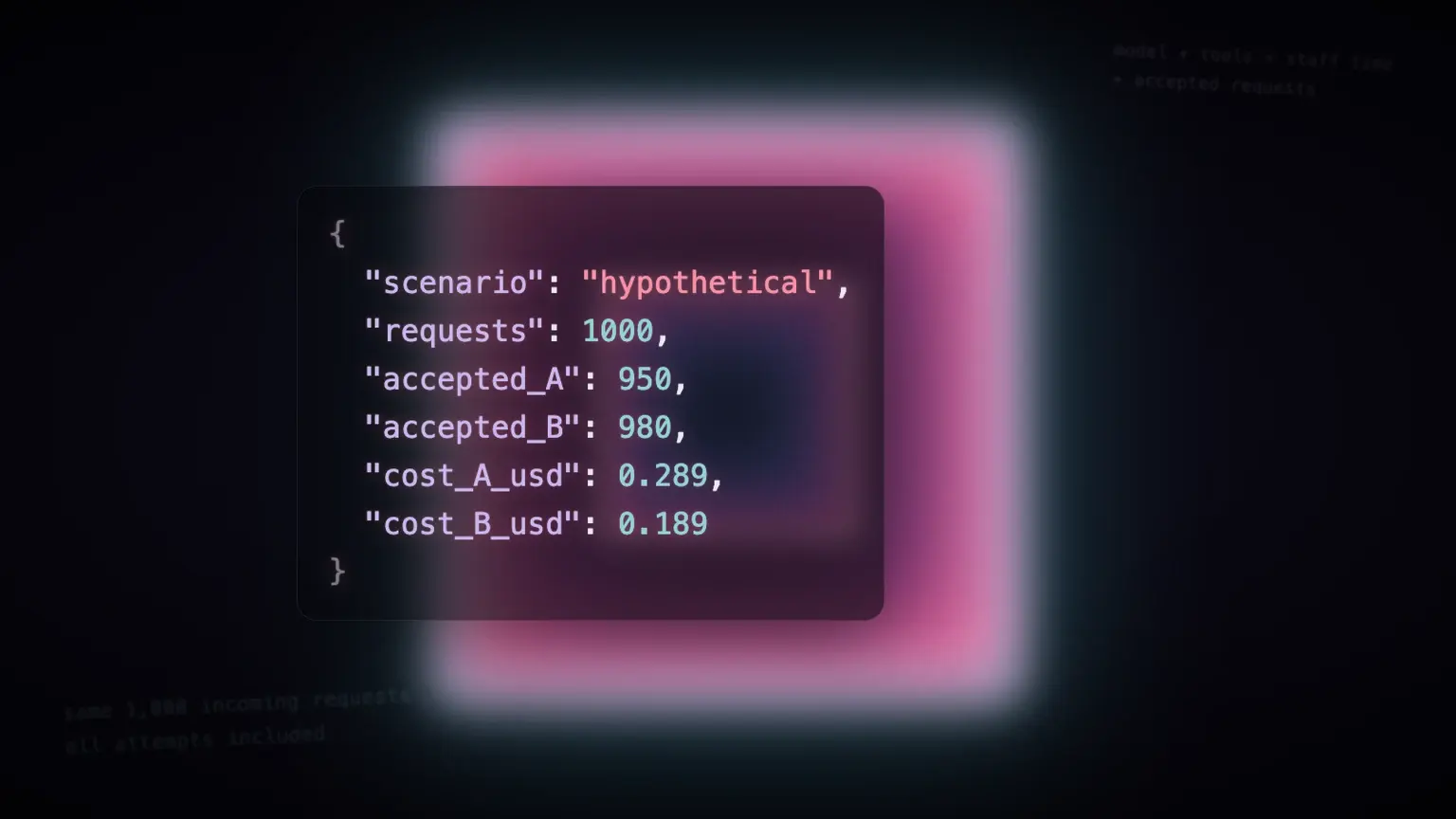
A launch announcement is enough to start a conversation. A dated, usable offer is what belongs in a delivery plan. We have not verified a price for the configuration your workload would need, so this article makes no claim that switching would reduce your bill.
Why does the work between model calls matter?
NVIDIA describes agents executing tools, testing code and retrieving data between model interactions, with CPU and GPU capacity able to scale independently. This gives the CPU part of an AI application its own investment decision. Announcement.
Measure each stage. The diagram represents an example workflow, not NVIDIA or Oracle’s internal architecture.
Consider a hypothetical distributor whose agent prepares order amendments for staff. It gathers the order, compares stock and delivery information, prepares a proposed change and requests approval. The useful result is an accurate amendment ready for review. A fast first sentence tells you little about how long that takes.
Now imagine the amendment waits on a remote stock service. Replacing the application’s CPU would not shorten the stock service’s own response time. If instead local processing of a large order consumes most of the delay, a compute evaluation has a clearer purpose. Both cases can look like “the AI is slow” to the employee.
Keep human approval visible in the measurement, too. A request waiting for a person is a different problem from a busy processor. Speeding the application should not quietly remove a review that protects the customer or the business.
Which three checks should come before a Vera evaluation?
These are our evaluation priorities for this announcement. They are operating decisions, not results from a dplyz Vera benchmark.
1. Find a recurring delay that compute could address
Choose one important workflow and examine completed requests as well as slow or failed ones. Separate model response time, local execution, remote-service waits and staff review. Include busy periods; an unusually clean demonstration is weak evidence for a production purchase.
Give the evaluation a business target: for example, getting a usable order amendment into the review queue sooner without increasing correction work. That makes the outcome testable. Buying a faster machine without naming the waiting work leaves the team with a new bill and the same argument.
2. Check that your application can use the environment
Oracle says Vera uses Arm-compatible cores. Review your application’s dependencies and operational tools for the proposed environment before treating it as a straightforward replacement. Oracle also labels its performance comparison as NVIDIA platform testing, rather than testing of OCI instances. CPU architecture and benchmark qualifications.
Run a representative evaluation with the same acceptance criteria as the existing application. Include awkward requests, dependency failures and the people responsible for recovery. Keep a working route back. Compatibility, correctness and supportability belong beside speed in the decision.
3. Compare the cost of completing the job
Ask what the new capacity would change in the whole workflow budget. Include infrastructure, connected services, engineering time and the review work that remains. A faster isolated stage can be valuable, but its value depends on how often the business runs that stage and what the delay currently costs.
Keep the starting scope narrow. If the trial requires moving unrelated systems to show a benefit, examine that added work as a separate investment. The team should be able to explain why this workload earns the migration before expanding it.
Should you change your AI infrastructure because of this launch?
Evaluate it when you have a substantial, measured CPU workload around your agents and a confirmed offer you can test. Keep your current setup when the important delay is elsewhere or the expected improvement does not justify the migration work.
A company using hosted model APIs can start by examining the application it already operates. It does not need to own a model-training fleet to ask better questions about performance. Likewise, a software buyer can ask its supplier where time is spent without choosing the supplier’s hardware.
Our reading of this announcement is that the distinction between model performance and application performance will become more important as agents do longer sequences of work. That is an interpretation of the launch, not a forecast of prices or a promise about any particular processor.
The standard we would apply is simple: show the completed business task, the remaining errors and the full operating cost. Our platform and cloud work connects those measurements to capacity decisions. If your team cannot yet explain where an agent spends its time, bring us the workflow.
FAQs
Is the NVIDIA Vera CPU the same as Vera Rubin NVL72?
No. The announcement covers standalone Vera CPUs as well as the Vera Rubin NVL72 system. It distinguishes CPU work around agents from GPU-intensive model work. NVIDIA’s announcement explains the relationship.
Does general availability mean every OCI region has it?
Do not assume that. Oracle’s launch post also describes selected-region availability this quarter. Confirm the location and capacity your application needs with Oracle. Availability detail.
Will a faster CPU make every AI agent faster?
No. First identify what delays the result. Local processing, a remote API, the model response and a person’s approval are separate contributors. An improvement to one stage cannot be assumed to fix the others.
Should a business migrate immediately?
Our recommendation is a bounded evaluation only after the workload, available configuration and business case are clear. Keep the existing system when a trial cannot demonstrate an improvement that matters to users at an acceptable total cost.
Written by the dplyz team
Senior engineers who work inside client companies to take AI from pilot to production: agentic workflows, AI integration and the platform work around them.