Don't see yours?The work is the same everywhere: the systems you already run, the people who use them and the hours an agent can take back.Contact us

Rebuild your software stack for agentic AI

An agentic rebuild replaces the software that no longer fits your business. dplyz redesigns the architecture, develops custom applications and connects them through shared data and APIs, so people and AI agents can work across the whole operation.

Discuss a project
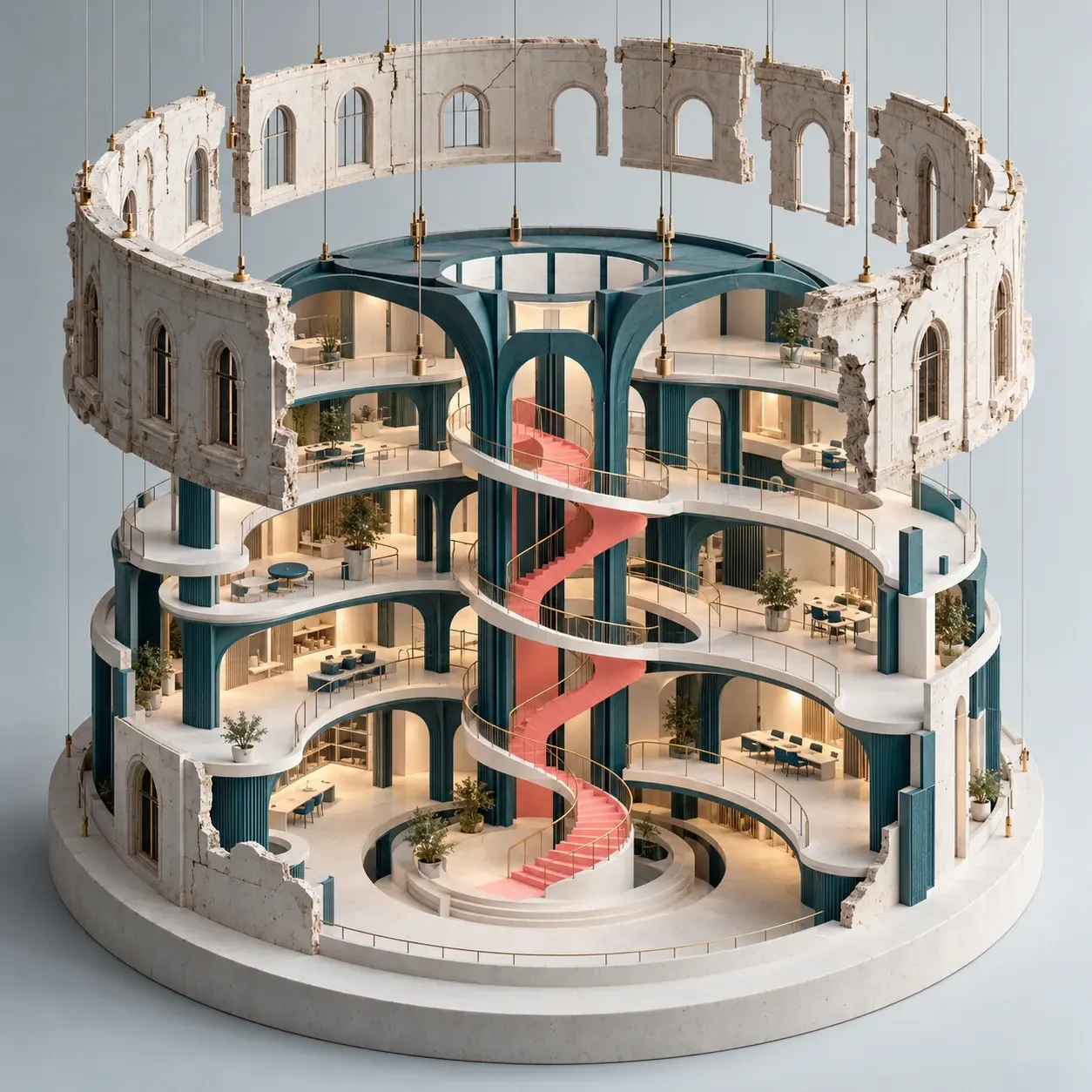
An exploded circular building model revealing connected floors and a shared central structure

Your team has become the connection between your tools

A customer request passes through a form, a spreadsheet, a CRM and a billing app. People copy the same details between them, and every exception creates another workaround. Adding AI to one screen leaves the rest of that work intact. We can rebuild the stack around the complete job, including the tools your team uses to manage it.

Scope of work

Architecture across the whole stack

Map applications, subscriptions, data ownership and business rules. Design a shared architecture with clear APIs, identity and permissions. Decide which systems to retain, replace or retire, and how each part moves into the new platform.

Custom tools that replace disconnected software

Build the operator workspace, customer portal, approval queue or scheduling tool your process needs. Bring scattered records into a consistent data model and replace overlapping applications where custom software is the better fit.

Agents built into the application

Give agents structured actions they can call across the new stack. A person and an agent use the same business rules, records and permissions. Include review screens, an action history and a way to resume work when an automated step fails.

Migration and software retirement

Move records with reconciliation checks, test the replacement against real work and cut over in stages. Keep a rollback path for each release. Retire the old application only after its users, data and downstream dependencies have moved.

A working example

One workspace from service request to invoice

An illustrative rebuild for a service business using separate intake, dispatch and job-tracking tools.

  1. 01

    Trace the job

    Follow an incoming request through quoting, scheduling, delivery and billing. Capture the rules currently held in spreadsheets and staff knowledge.

  2. 02

    Build the core

    Create a shared customer and job record, with custom screens for dispatchers and field staff. Keep the accounting platform connected through its API.

  3. 03

    Add the agents

    Let an agent prepare a quote, suggest an available slot and draft the customer update. The dispatcher approves exceptions in the same workspace.

  4. 04

    Move and retire

    Migrate active jobs, compare totals and run the new flow with one team. Retire the replaced tools after the new workflow is accepted.

Built to hand over

What you receive

A whole-stack rebuild can ship in stages. You get a working replacement for an agreed business process before the next part moves. We include the cost of running and maintaining custom software when deciding what to replace.

About agentic rebuild

AI integration adds model capabilities to applications you already use. An agentic rebuild is application modernization that changes the applications and the architecture beneath them: custom interfaces, shared data, APIs and workflows that people and agents can use together.

Yes, where the replacement has a clear business case. We compare the features you use, licensing, data access, integrations and ongoing maintenance. The plan identifies which subscriptions can be retired and which systems are worth keeping.

No. We can replace one business process at a time while the existing systems keep running. Each stage has data checks, acceptance criteria and a rollback plan before the next stage starts.

Agents can use explicit application actions to complete steps across the workflow, such as preparing a quote or updating a job. Your rules determine which actions run automatically and which need a person. The team can inspect what happened and take over an unfinished task.

The code, infrastructure configuration and documentation are delivered into your accounts. We agree who will operate the system and whether your team or an ongoing engagement will maintain it.

Let's talk about agentic rebuild

Tell us what you want to change, what you run today and who will use the result.

Talk with our team