
InsightsPlatform & cloud
Why Cloudflare belongs in your 2027 infrastructure plans
Applications, background jobs, files and database connections on a platform a small team can operate. That is a serious advantage when the roadmap keeps growing.
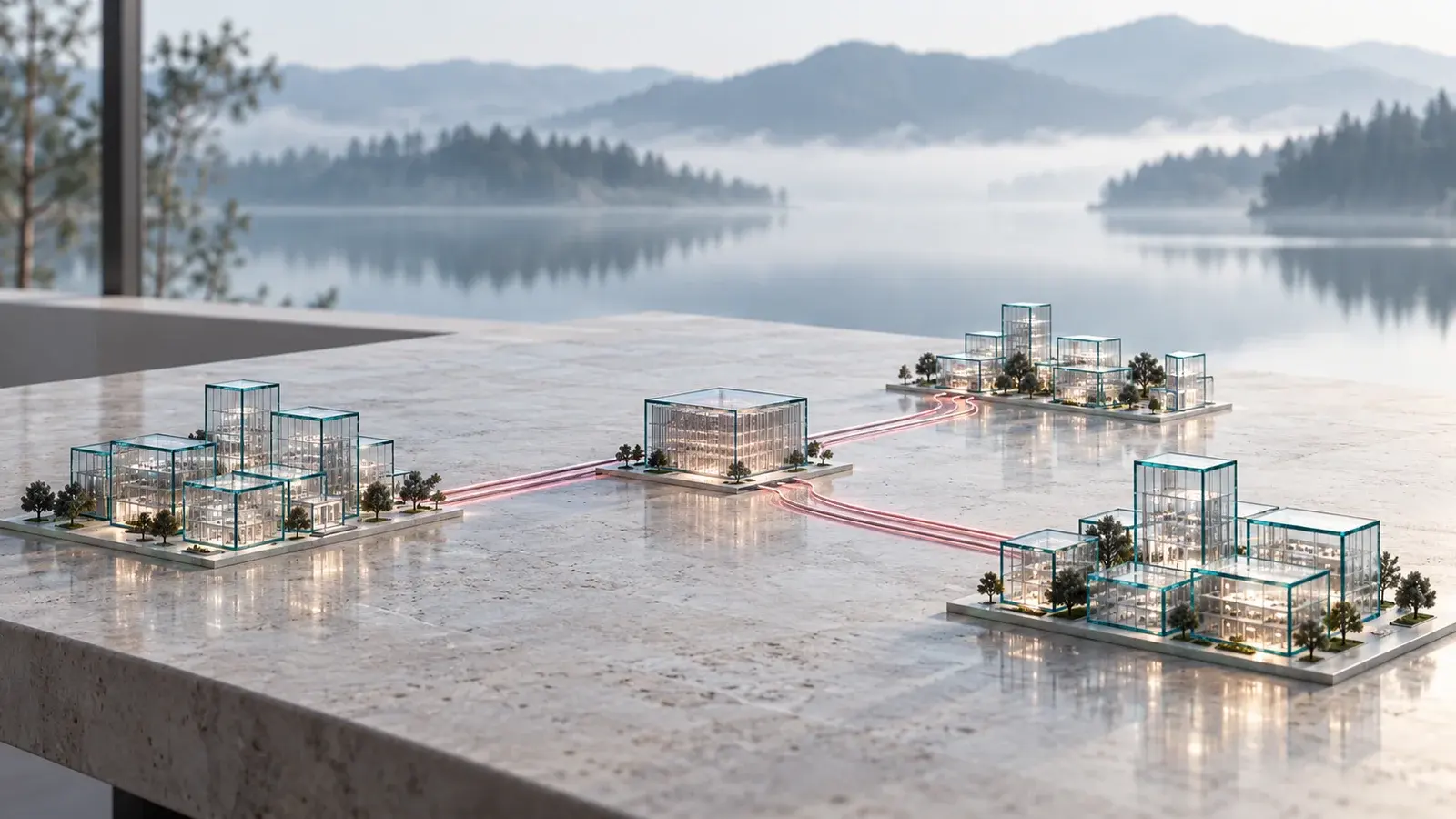
The case for Cloudflare is how much a team can own
Cloudflare deserves a place in a company’s 2027 infrastructure plans because it brings application execution, background processing, storage and connections to existing databases into one developer platform. For a lean engineering team, that can mean fewer separate systems to provision and operate before a product is useful.
This is a planning view written in October 2026, based on capabilities available now. The argument does not depend on an unreleased feature or a prediction about next year’s pricing.
Think about a customer portal. It needs a fast interface, authenticated requests, uploaded documents, background tasks and a dependable business record. Add AI and it also needs somewhere to wait for a model response, recover from a failed call and ask for approval. Those supporting pieces quickly become most of the build.
Cloudflare has services for much of that surrounding work. Its data and storage guide lays out the different jobs they serve. The value comes from choosing the right few, then making them work together.
The website is only the beginning
Workers provide the application layer. Alongside it, Queues can separate a request from the work it starts, R2 can hold files, and Workflows can coordinate a process that needs multiple steps. You can build an internal tool or customer-facing product without treating every background task as a new server to maintain.
| Business requirement | A Cloudflare building block | The engineering decision |
|---|---|---|
| Receive a request and return a response | Workers | Authentication, validation and the boundaries of each endpoint |
| Process a burst of incoming jobs | Queues | Deduplication, retry handling and failed-job ownership |
| Store documents and generated files | R2 | Access permissions, lifecycle and total storage cost |
| Wait for a person or external system | Workflows | Durable steps, approval expiry and safe recovery |
| Connect to existing Postgres | Hyperdrive | Connection behavior, caching and database placement |
These are complementary responsibilities. A queue does not replace the database record showing whether an order was approved. A file store does not decide who is allowed to download an invoice. Keep those decisions explicit.
Follow one job through the system
Imagine a service company receiving a request for a quote. The application validates the submission, records a job ID and places document-processing work on a queue. The customer gets a receipt immediately. An AI step later extracts the requested work; a manager reviews the draft quote before it is sent.
That process has pauses. Cloudflare Workflows supports persistent multi-step execution, retries and waiting for external events such as an approval. This makes it possible to resume the process without keeping the customer’s browser request open.
Recovery still needs design. Queues uses at-least-once delivery, so a message can arrive more than once. Use a stable job ID and idempotent operations: a retry should find the existing quote, not send another one. Apply the same thinking to external side effects in retried workflow steps.
This is why we like the platform for agentic workflows. The model can propose an action while durable application code handles the state, permissions and execution around it. You can change the model without redesigning the entire business process.
Keep the database that already works
Adopting Cloudflare does not require moving every record into a new database. Hyperdrive connects Workers to existing Postgres and MySQL databases and manages underlying connection pools. It can also cache queries, which needs to be configured around the freshness the application requires.
That gives a company room to modernize incrementally: build a new portal or API while the existing database remains authoritative. Hyperdrive does not remove the physical distance to that database or make a poorly shaped query efficient. Measure the complete request, including database and external API time.
For the records themselves, Postgres remains a strong foundation. The application can change quickly while transactions, relationships and access rules keep the business data coherent.
Count the operating costs and the limits
R2’s lack of internet egress charges is useful for file-heavy applications. Storage and operations still have costs, and infrequent-access storage introduces retrieval considerations. Work through the actual workload rather than treating “no egress fees” as “free storage.” R2 pricing.
Workers also has runtime limits, including memory and CPU constraints. Check dependencies, execution time and platform compatibility before moving an existing backend. A process that needs substantial local memory, specialized native software or heavy computation may belong elsewhere. Workers limits.
A distributed entry point cannot make every dependency local. If most time is spent waiting on a regional database or model provider, that remains part of the user’s experience. And consolidating on a platform creates its own dependency: keep configuration in code, document recovery and know how to export your data.
Build the 2027 plan around one real product
Start with a portal, integration or internal tool that has a clear owner. Map its synchronous requests, background jobs, files and records. Pick the Cloudflare services that fit, test failure recovery and measure cost per completed task before expanding.
We run this site on Cloudflare Workers. That is a practical deployment choice, not a claim that every client application should share its architecture. Our platform and cloud work starts with the product’s demands and the people who will operate it.
The compelling part of Cloudflare is how much useful infrastructure it puts within reach of a small team. For a company planning more software and more automation in 2027, that is worth a serious look.
More insights
 Industry analysisThe next AI race is happening around the modelPi, Shopify, Coinbase and the legal industry point to a broader shift: companies are taking more control over the systems and knowledge around AI.
 OpinionAI is changing how businesses build. Copyright needs to catch up.A business can spend months directing a product into existence. It deserves a clearer answer about which parts of that work it can protect.
 Agentic commerceYour next customer may send an AI agent. Can your business close the sale?Personal agents are starting to do the buying. Your business needs a clear path from a customer’s request to a price, a payment and a confirmed order.